
April 25 - May 12, 2024
April 23 - May 10, 2025
18 DAYS / 17 NIGHTS from $4,285
Our staff at 1-800-246-7238 is ready to help
Trip Highlights
One of the greatest treks in the world, a combination of awe-inspiring beauty, history, and rich Sherpa culture
Yaks and porters carry all of your heavy gear, so you can pack a light daypack and fully enjoy the experience.
Watch the sunrise over Mt. Everest from Kala Patar (18,192 ft.), arguably the best view in the Himalayas!
Stay in comfortable traditional lodges called "Tea-houses" each evening on the trek.
Tour Kathmandu and multiple UNESCO World Heritage sites. Learn about Buddhist and Hindu traditions.


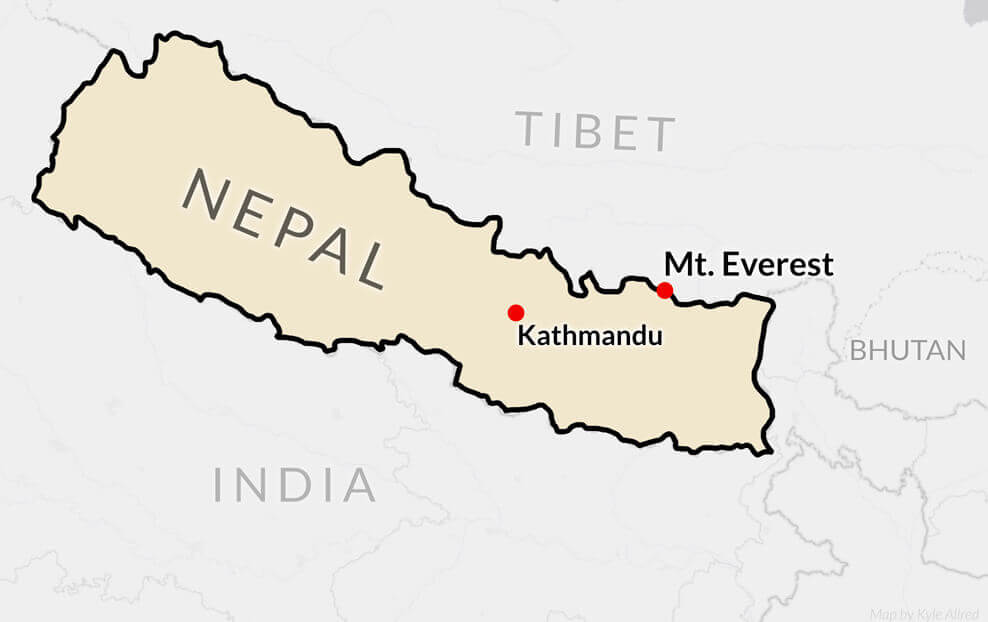
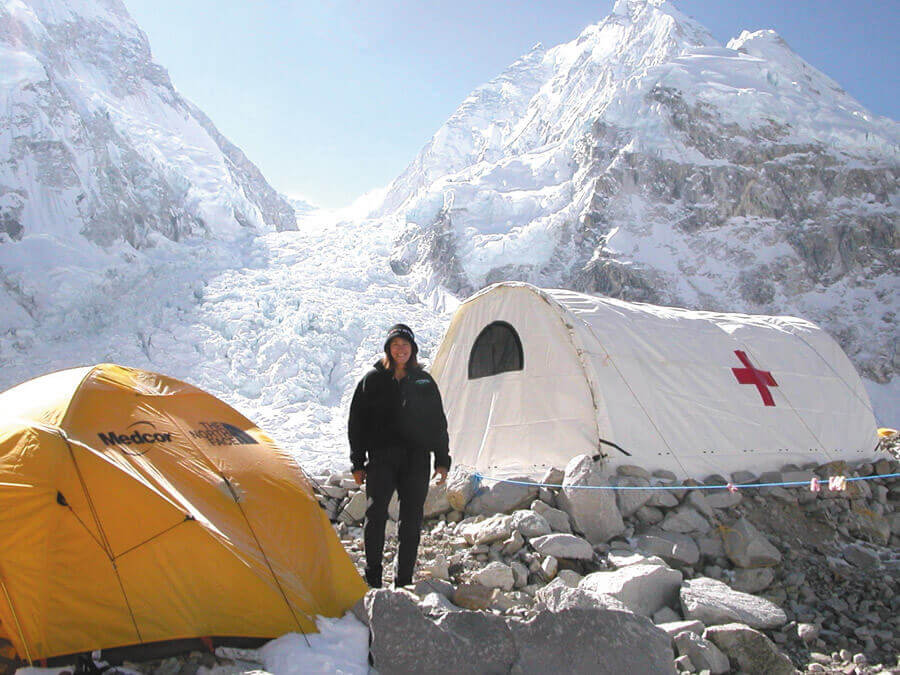
Our group will explore the exotic city of Kathmandu before flying into the remote mountain town of Lukla (9,350 feet) to begin our trek into the Khumbu region of the Himalayas.
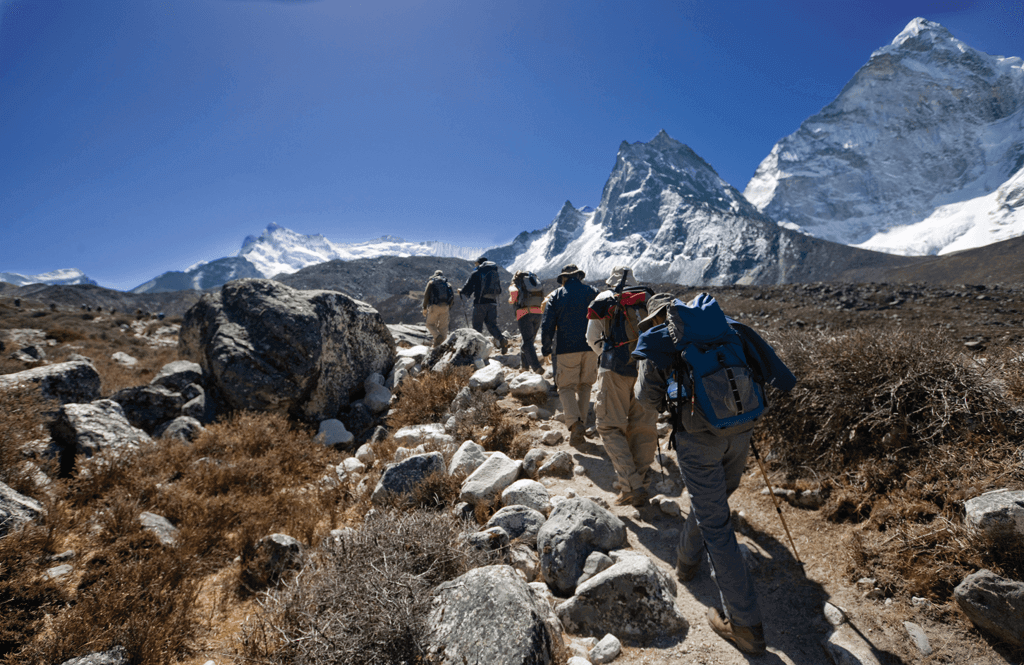
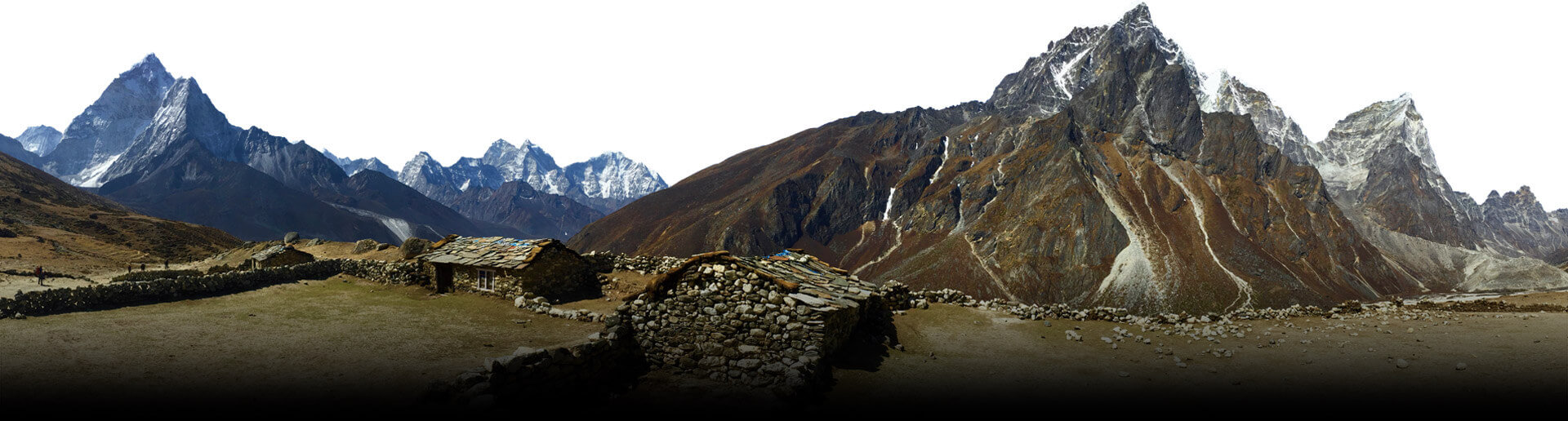
We follow an ancient route through tiny villages, across high mountain passes, and through remote valleys. The views of the Himalayas are awe-inspiring as we venture up the Dudh Kosi River to Namche Bazaar, the gateway to the Khumbu region at 11,300 feet. We spend one night next to the Tengboche monastery (12,887 feet), which has spectacular views of Ama Dablam, Mt. Everest, and Lhotse.
We’ll meet the friendly Nepali people and soak up the sights and sounds of Sherpa village life while staying in comfortable lodges called teahouses for our entire trek.
From there, it’s on to the stunning rocky outcrop of Kala Patar (18,192 feet) where we feast on awesome views of the south face of Everest. We’ll trek to Everest Base Camp and get a first-hand look at expeditions preparing for their summit attempts in this spectacular and historical setting.
Itinerary Snapshot
Mount Everest Base Camp CME Trek
Wilderness & Expedition Medicine
 DAY 1 Arrive in Kathmandu (Hotel Yak & Yeti)
DAY 2 Relax and explore Kathmandu on your own (Hotel Yak & Yeti) (B)
DAY 3 Flight to Lukla and trek to Monjo (B+L+D)
DAY 4 Trek 4-5 hours to Namche Baazar (B+L+D)
DAY 5 Acclimatization day in Namche Baazar (B+L+D)
DAY 6 3 hour trek to explore Kunde and Khumjung (B+L+D)
DAY 7 Trek 5-6 hours through Tengboche to Deboche (B+L+D)
DAY 8 5-6 hours to Dingboche. (B+L+D)
DAY 9 Acclimatization day in Dingboche w/ optional hikes (B+L+D)
DAY 10 5-6 hours to Lobuche (B+L+D)
DAY 11 8-10 hours to Everest Base Camp, return to Gorekshep (B,L,D)
DAY 12 Ascend to Kala Patthar, return to Lobuche to sleep (B+L+D)
DAY 13 5-6 hours to Deboche (B+L+D)
DAY 14 4-6 hours to Namche Baazar (B+L+D)
DAY 15 Return to Lukla: 7 hours (B+L+D)
DAY 16 Fly to Kathmandu, weather permitting (Hotel Yak & Yeti) (B)
DAY 17 Morning city tour of Kathmandu (Hotel Yak & Yeti) (B+D)
DAY 18 Fly home (B)
ABOUT THE OUTSTANDING PROFESSIONAL GUIDES FOR THIS TRIP
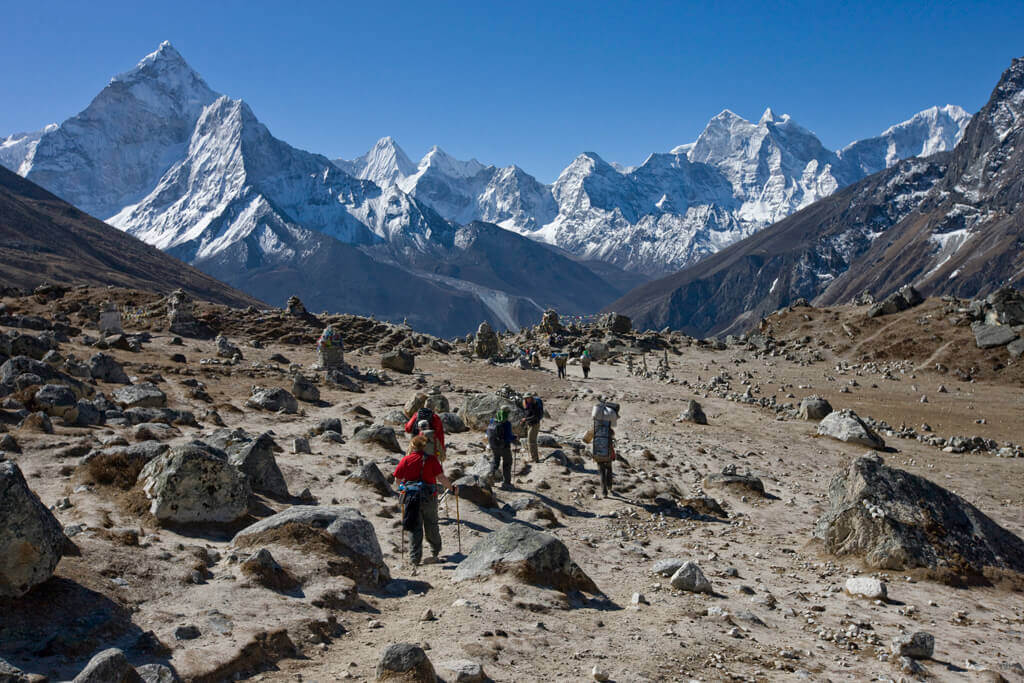
Shangri-la Treks is widely regarded as the premier guide service in Nepal and is the top choice of many Everest expeditions, including famed Everest climber Pete Athans...
"I can wholeheartedly recommend my friend Jiban Ghimire of Shangri-la Treks to organize your Khumbu experience. I've worked with these gentlemen close to 20 years and feel more than confident in their ability to deliver a great expedition."
Pete Athans - legendary climber who has reached the summit of Everest an incredible seven times!
Dates & Pricing
The earlier you book, the more choice of available dates you'll have. Prices are based on double occupancy.
Qualifications: The trek to Everest Base Camp is strenuous and you should be in excellent physical condition. It does not require that you have any previous trekking or mountaineering experience. You should be equipped with a spirit of adventure and a willingness to undergo the potential hardships of outdoor living and long days on the trail.
Trip includes: 4 scheduled hotel nights in Kathmandu, selected sightseeing in Kathmandu, professionally guided trek from Lukla to Everest Base Camp, porters and yaks to carry your gear on trek, all meals while on the trek, and plus select meals in Kathmandu.
Trip does not include: Internal airfare from Kathmandu to Lukla (this is mandatory for the trip, but we will book it for you), medical rescue insurance, and helicopter transport (for medical reasons or unforeseen weather delays).
April 25 - May 12, 2024
$4,285 per person
$789 Optional CME Cost
(16 AMA PRA Category 1 Credits™)
Approx $400 Round trip flight from Kathmandu to Lukla
$100 Nepal Government tax
Full - Accepting Waitlist
April 23 - May 10, 2025
$4,485 per person
$789 Optional CME Cost
(16 AMA PRA Category 1 Credits™)
Approx $400 Round trip flight from Kathmandu to Lukla
$150 Nepal Government tax
Available - Filling Quickly
Questions? Ready to reserve your spot?
Speak to an expert at Bio Bio Expeditions - the award winning outfitter of this trip
1-800-246-7238
A few of the publications Bio Bio Expeditions has been featured in:
Testimonials From Your Colleagues
"My daughter Taylor had an incredible time. After this experience, she is determined to reach for the stars and become a doctor. The CMEs and getting to know doctors who inspired her along the way really have a profound effect on her"
WHITNEY PARSONS JUSTICE
"The Everest Wilderness Medicine trip was an unforgettable, life-changing experience! Thanks so much for the wonderful opportunity! the CME participants were diverse, enthusiastic, and blast to be with."
TIM ERICKSON, MD PROFESSOR OF EMERGENCY MEDICINE, U. OF ILLINOIS
"There is no better Wilderness Medicine course. Guide staff and logistics were great. Chemistry of the group was great."
DAVID CHENAULT, MD HOUSTON, TX ENT
COURSE CONTENT INCLUDES
- Altitude Illness
- Hypothermia
- Frostbite and Other Cold Injuries
- Environmental Heat Illness
- Traveler's Diarrhea, Giardia & Other Waterborne Wilderness Infections
- Surviving the Unexpected Night Out
- Lightning Injuries
- Improvised Medical and Trauma Care
- Management of Fractures and Dislocations
- Preparing for Foreign Travel
- Backcountry Medical Kits
- Wilderness Wound Management
- Patient Assessment in Wilderness Settings
- Wilderness Dermatology
- Marine Hazards & Envenomations
- Snake Envenomation
CME ACCREDITATION INFORMATION
"This activity has been planned and implemented in accordance with the Essential Areas and policies of the Accreditation Council for Continuing Medical Education through the joint providership of the Center for Emergency Medical Education and Wilderness and Travel Medicine. The Center for Emergency Medical Education is accredited by the ACCME to provide continuing medical education for physicians."
The Center for Emergency Medical Education designates this live activity for a maximum of
16 AMA PRA Category 1 CreditsTM.
Physicians should claim only the credit commensurate with the extent of their participation in the activity.
This trip is planned, outfitted and conducted by Bio Bio Expeditions, or subcontractors arranged by Bio Bio Expeditions. Please note that Wilderness and Travel Medicine, LLC is responsible for the CME Educational content only. Wilderness and Travel Medicine reserves the right to change or substitute the faculty for any CME course without advance or prior notice to participants.
For more information or to register for this trip please call
Bio Bio Expeditions at 1-800-246-7238
UPCOMING CME DESTINATIONS BY DATE
Apr 1 - 11, 2024
Apr 25 - May 12, 2024
The National Conference on Wilderness Medicine - Santa Fe
May 29 - June 2, 2024
Skills Course Rafting & Mt. Shasta
June 8- 14, 2024
The National Conference on Wilderness Medicine - Big Sky
July 27 - July 31, 2024
Deluxe African Safari: Zimbabwe
July 29 - Aug 8, 2024
Sept 1 - 6, 2024
Sept 1 - 11, 2024
Deluxe African Safari: Zimbabwe
Sept 5 - 15, 2024
Sept 11 - 21, 2024
Sept 12 - 23, 2024
Sept 19 - 27, 2024
Oct 6 - 16, 2024
Oct 6 - 20, 2024
Oct 13 - 24, 2024
Oct 21 - Nov 3, 2024
Jan 25 - Feb 1, 2025
Jan 27 - Feb 4, 2025
Classic Patagonia - Torres Del Paine
Jan 29 - Feb 9, 2025
Japan Ski & Snowboard Adventure
Feb 2 - 8, 2025
Mar 15 - 22, 2025
Apr 20 - 30, 2025
April 23 - May 10, 2025
Apr 25 - May 5, 2025
Skills Course Rafting & Mt. Shasta
June 7 - 13, 2025
June 8 - 13, 2025
Deluxe African Safari: Zimbabwe
Aug 16 - 26, 2025
Aug 31 - Sept 10, 2025
Sept 1 - 6, 2025
Sept 10 - 20, 2025
Sept 28 - Oct 9, 2025
Oct 5 - 15, 2025
Fly Fishing for All Levels - Northern California
Oct 12 - 17, 2025
Oct 25 - Nov 7, 2025